
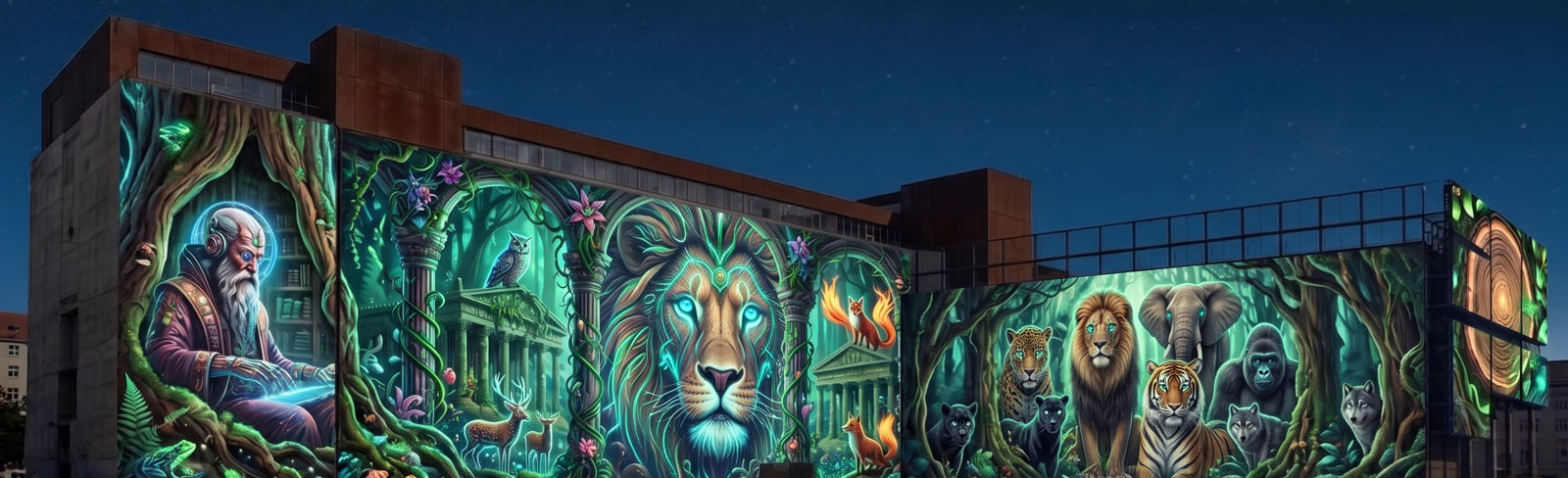
The world of live events is evolving rapidly, and audiences today expect more than just visuals, they expect experiences. As brands, event organisers, and venues push creative boundaries, projection mapping continues to lead the transformation of how stories are told in physical spaces.
In 2026, projection mapping is not just a visual enhancement, it’s a core experiential tool driving engagement, immersion, and brand recall. Here are the top trends shaping the future of projection mapping in live events.
Projection mapping is moving beyond stages and screens to envelop entire spaces. Walls, ceilings, floors, and even objects are being transformed into cohesive storytelling environments.
This trend is especially powerful for:
The result is a seamless, all-encompassing experience where audiences are not just viewers, but participants.
Artificial Intelligence is redefining how projection mapping content is created and delivered. In 2026, visuals are no longer static or pre-rendered.
AI enables:
This creates a more responsive and engaging live event environment.
Audience interaction is becoming central to event design. Projection mapping is now integrating motion sensors, touch interfaces, and gesture recognition.
Applications include:
This trend significantly boosts engagement and dwell time.
Projection mapping is increasingly being combined with advanced laser systems and intelligent lighting to create multi-layered visual spectacles.
The synergy between projection, lasers, and lighting results in:
This hybrid approach is becoming a standard for large-scale events and festivals.
With sustainability becoming a priority, projection mapping is replacing heavy physical décor and materials.
Benefits include:
This makes projection mapping a smart choice for eco-conscious brands and organisers.
Large-scale building façade mapping is gaining momentum across public events, festivals, and government projects.
In 2026, we’re seeing:
This trend is particularly strong in India, where cultural narratives are being brought to life through projection mapping.
Advancements in rendering technology are making projection mapping visuals more realistic than ever.
Expect:
These visuals blur the line between digital and physical environments, creating a “wow” factor that audiences remember.
Events are no longer limited to a single projection surface. In 2026, multiple surfaces are synchronised to create a unified narrative.
This includes:
The outcome is a cohesive, high-impact experience across the entire event space.
As hybrid events continue to evolve, projection mapping is being used to bridge physical and digital audiences.
This makes projection mapping a critical tool for future-ready event strategies.
Brands are increasingly using projection mapping to tell customised stories that resonate with their audience.
From product narratives to brand journeys, projection mapping enables:
This is especially valuable for luxury, automotive, and tech brands.
These trends highlight one key shift: events are no longer about viewing, they are about experiencing.
Projection mapping sits at the intersection of technology, design, and storytelling, making it one of the most powerful tools for:
At Showman, we stay ahead of evolving technologies to deliver cutting-edge projection mapping experiences for live events, brand activations, and large-scale productions.
From immersive environments to AI-driven visuals and integrated laser shows, our solutions are designed to create unforgettable experiences that align with the latest industry trends.
Projection mapping in 2026 is smarter, more immersive, and more impactful than ever before. As expectations continue to rise, adopting these trends is no longer optional, it’s essential for creating standout events.
If you’re looking to future-proof your events and deliver truly immersive experiences, projection mapping is the way forward. To get a free quote, contact us.


