
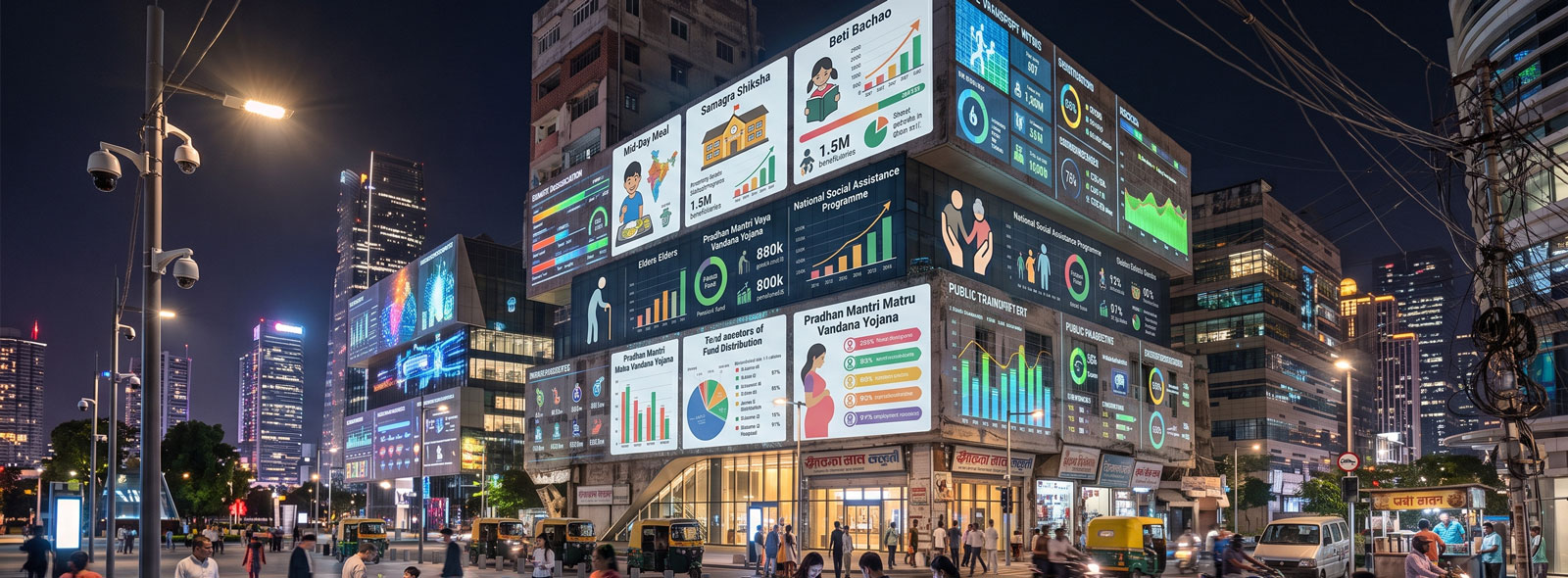
Cities around the world are becoming smarter, more connected, and increasingly focused on enhancing the quality of urban life. From intelligent infrastructure and digital governance to sustainable public spaces, Smart City projects are reshaping how people interact with their surroundings.
Amid these advancements, projection mapping has emerged as a powerful technology that brings urban spaces to life. Once primarily associated with concerts and entertainment events, projection mapping is now being used to transform public buildings, monuments, parks, and city landmarks into immersive platforms for communication, culture, tourism, and community engagement.
By combining technology, creativity, and storytelling, projection mapping in Smart City projects is helping cities create memorable public experiences while strengthening their cultural identity and promoting civic participation.
Projection mapping is an advanced visual technology that projects digital content onto physical surfaces such as buildings, monuments, sculptures, bridges, and public infrastructure. Using specialised software, visuals are precisely aligned with the architectural features of a structure, creating stunning 3D illusions that make static objects appear animated.
Unlike traditional digital displays or LED screens, projection mapping transforms existing infrastructure into dynamic storytelling canvases without permanently altering the structure.
Smart cities aim to improve urban experiences by integrating technology into public spaces. While much of the focus is on transportation, connectivity, and sustainability, creating engaging public environments is equally important.
Projection mapping helps cities:
Instead of static signage or conventional displays, projection mapping enables cities to communicate through immersive visual experiences that capture public attention.
1. Revitalising Public Spaces
Urban plazas, parks, and open spaces often serve as gathering points for communities. Projection mapping transforms these areas into vibrant destinations by creating interactive visual installations, seasonal celebrations, and artistic experiences.
Whether it’s a city square or a waterfront promenade, projection mapping encourages people to engage with public spaces in new and exciting ways.
2. Architectural Projection Mapping on Heritage Buildings
Many Smart City initiatives focus on preserving cultural heritage while embracing modern technology.
Architectural projection mapping allows cities to celebrate historical landmarks by projecting stories, artwork, and historical narratives onto iconic buildings without affecting their physical structure.
This approach helps:
The technology allows heritage buildings to tell their own stories in visually compelling ways.
3. Tourism and Destination Branding
Tourism is a major contributor to urban economies. Cities are increasingly using building projection mapping to create evening attractions that encourage longer visitor stays and boost local businesses.
Projection mapping can be used to showcase:
Night-time projection shows often become signature attractions that strengthen a city’s global identity.
4. Government Celebrations and National Events
Projection mapping has become a preferred medium for commemorating national holidays, public anniversaries, and civic celebrations.
Government agencies use projection mapping to display:
Large-scale projections on government buildings create memorable experiences that bring communities together.
5. Public Awareness Campaigns
Smart cities frequently conduct campaigns around:
Projection mapping presents these messages in a visually engaging format, making them more impactful than traditional communication methods.
Interactive storytelling also improves public participation and awareness.
6. Smart City Festivals and Community Events
Modern cities increasingly organise cultural festivals, art exhibitions, and community events to strengthen civic engagement.
Projection mapping enhances these experiences through:
The technology transforms ordinary events into immersive community experiences.
Enhances Public Engagement
People naturally respond to visually engaging experiences. Projection mapping attracts attention, encourages participation, and creates memorable interactions within public spaces.
Projection mapping allows cities to celebrate their heritage digitally without altering historic architecture, making it an effective tool for cultural preservation and education.
Unlike large physical installations, projection mapping relies on temporary digital content, reducing the need for permanent structures, printed materials, and event waste.
Digital storytelling also allows content to be updated without rebuilding infrastructure.
Unique projection mapping shows encourage visitors to explore cities after dark, increasing tourism activity, supporting local businesses, and enhancing destination appeal.
Cities around the world have successfully integrated projection mapping into tourism strategies to create iconic attractions.
Every city has a unique story.
Projection mapping helps communicate that story through immersive visual experiences that reflect local culture, innovation, and identity.
A memorable projection show can become a defining element of a city’s public image.
As urban technology continues to evolve, projection mapping is becoming more intelligent and interactive.
Key trends include:
Artificial Intelligence enables real-time content adaptation based on audience behaviour and environmental conditions.
Interactive Public Installations
Motion sensors and gesture recognition allow citizens to interact directly with projected visuals.
Integration with IoT Infrastructure
Projection mapping can work alongside connected city infrastructure to deliver dynamic public information and event experiences.
Sustainable Event Production
Digital projections reduce the need for large-scale physical installations while enabling reusable content for multiple events.
The future of urban spaces lies in creating environments that are not only functional but also inspiring.
Projection mapping helps cities:
As Smart City initiatives continue to expand across India and globally, projection mapping will play an increasingly important role in shaping the urban experience.
At Showman, we specialise in creating immersive visual experiences that transform public spaces into powerful storytelling platforms.
Our expertise includes:
From concept development and creative storytelling to technical execution and on-site production, our team delivers end-to-end projection mapping solutions tailored to Smart City initiatives.
Whether it’s a heritage monument, public plaza, cultural festival, or government celebration, Showman helps cities create experiences that inspire, engage, and leave a lasting impression.
As cities continue to evolve through digital innovation, projection mapping is becoming an integral part of Smart City development. Beyond its visual appeal, it serves as a powerful medium for storytelling, public engagement, tourism, and cultural preservation.
By transforming everyday urban spaces into immersive experiences, projection mapping helps cities connect with residents and visitors in meaningful ways. It is more than an event technology—it’s a tool for shaping vibrant, interactive, and future-ready cities.
For governments, urban planners, event organisers, and destination managers looking to create impactful public experiences, Showman offers the expertise and creative vision to bring Smart City projects to life through world-class projection mapping solutions.
What is projection mapping in Smart City projects?
Projection mapping in Smart City projects uses digital projections on buildings, monuments, and public infrastructure to create immersive experiences, promote tourism, communicate public messages, and enhance urban spaces.
How does projection mapping benefit Smart City projects?
It improves public engagement, supports cultural preservation, strengthens city branding, boosts tourism, enables creative public communication, and offers a sustainable alternative to temporary physical installations.
Can projection mapping be used on heritage buildings?
Yes. Architectural projection mapping is a non-invasive technology that projects visuals onto heritage structures without altering or damaging the building, making it ideal for cultural storytelling and tourism initiatives.
Is projection mapping suitable for government and civic events?
Absolutely. Projection mapping is widely used for national celebrations, cultural festivals, public awareness campaigns, and official ceremonies to create engaging and memorable experiences.


